Designed for: EMDR-trained therapists, consultees, and clinical supervisors
Use this tool to: identify what is disrupting EMDR preparation, apply targeted adaptations, and support more effective stabilization. It also helps guide clinical decisions about pacing and readiness for reprocessing.
About Cannon Psychology: APA-approved sponsor providing evidence-based EMDR continuing education, ethics resources, and clinician toolkits.
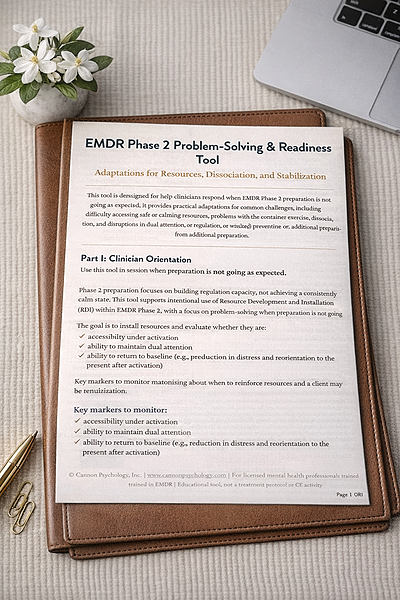
About the Problem-Solving & Readiness Tool
EMDR preparation does not always progress as expected. Clients may have difficulty accessing resources, experience dissociation, or struggle to maintain regulation and dual attention during Phase 2. This tool provides a structured, clinically grounded approach to understanding what is disrupting preparation and how to respond effectively. It guides clinicians through identifying the core issue and selecting targeted adaptations to improve stabilization, strengthen resource access, and support safe progression toward reprocessing. The tool includes practical adaptation options for common challenges, including difficulty accessing safe or calming resources, problems with the container exercise, dissociation, and disruptions in dual attention or regulation. It also supports clinical decision-making around pacing and readiness, helping determine whether additional preparation is needed before moving forward. Designed for use in-session or as part of treatment planning, this resource helps clinicians move from uncertainty to clear, actionable next steps during EMDR Phase 2. How This Differs from the Quick Guide The Quick Guide: EMDR Phase 2 Troubleshooting & Adaptations is a condensed, in-session reference designed for rapid decision-making. This full Problem-Solving Tool provides a more comprehensive, structured process for: evaluating readiness understanding the underlying barrier selecting and organizing targeted interventions Both tools are designed to be used together: the full tool supports deeper clinical decision-making, while the quick guide supports real-time application during sessions. For professional use only. This tool is not a substitute for supervision or consultation.