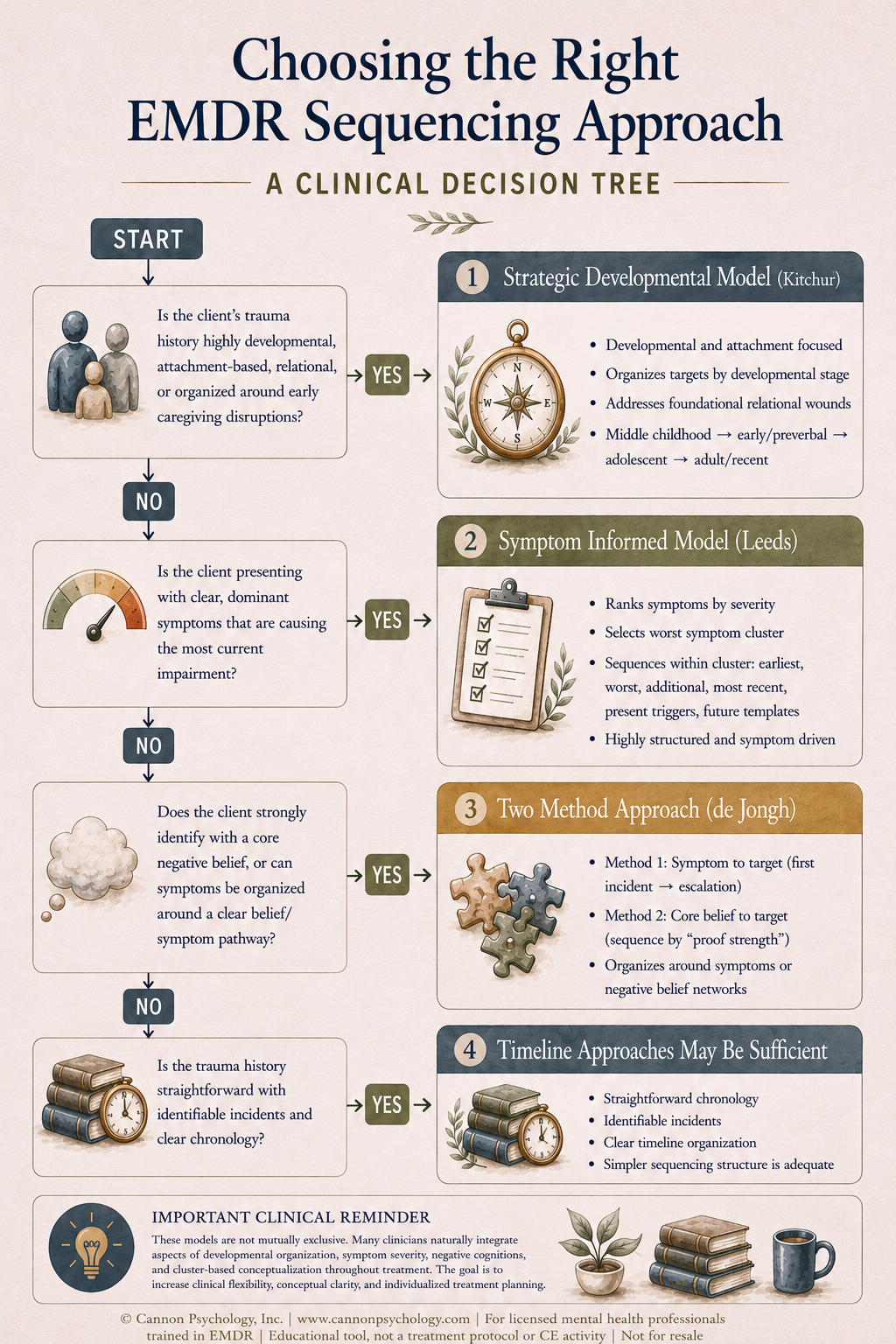
EMDR Target Sequencing Approaches
Choosing the order of EMDR targets is one of the most important decisions in treatment planning, particularly when clients present with multiple traumatic experiences, developmental trauma, or several symptom clusters. While many clinicians learn chronological sequencing during basic training, several evidence-informed models can help organize targets based on developmental history, symptom presentation, negative belief networks, or treatment goals. Designed for: licensed mental health professionals who have completed or are currently enrolled in formal EMDR training. About Cannon Psychology Continuing Education: Cannon Psychology Continuing Education provides evidence-informed EMDR training, continuing education courses, and practical clinical tools designed to support treatment planning, target selection, preparation, stabilization, and trauma-focused therapy. Explore additional resources through the EMDR Treatment Planning Hub, including clinician guides, treatment planning tools, and self-paced continuing education for psychologists and licensed mental health professionals.
About the Infographic
This free infographic provides a visual clinical decision tree to help you determine which sequencing approach may best fit a client's presentation. It summarizes four commonly referenced approaches to EMDR target sequencing, including the Strategic Developmental Model, Symptom-Informed Model, Two-Method Approach, and situations where a straightforward timeline may be sufficient. Use this guide as a quick reference during treatment planning, consultation, or case conceptualization to compare different sequencing models and organize your clinical thinking.